We pride ourselves on leading the charge when it comes to innovation in security solutions. But having been operating in Britain since 1926, Britain’s architectural legacy is part of our family business’ history too. So we’re uniquely placed to work sympathetically to create security solutions for listed and heritage properties, honouring period design and retaining unique character while delivering cutting edge technology.
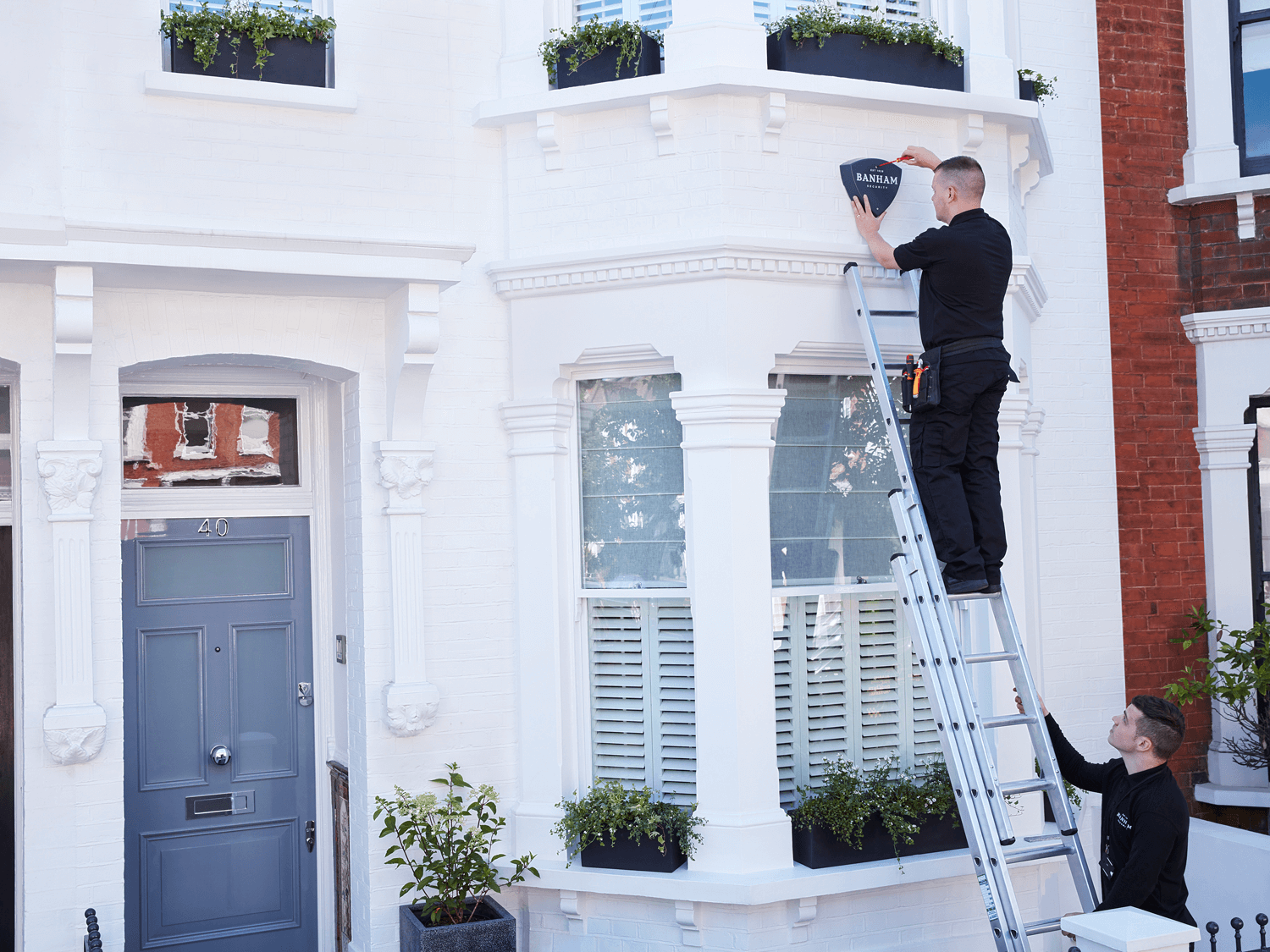
We’re trusted to protect homes and businesses on some of Britain’s most beautiful streets. You’ll find the Banham shield adorning Georgian, Edwardian, Victorian and mid-century architectural gems - though sometimes, you won’t be able to see our protections from the street, since tailoring security solutions to period properties often means stealth ‘invisible’ designs that don’t detract from kerb appeal or character. When it comes to choosing a burglar alarm or security for a heritage building, and working within the parameters required for Grade I and Grade II listed properties, technicality is key - but should never come at the cost of design.
Our specialist team approaches each property with an emphasis on heritage. That means respecting listed facades and interior period detailing, creating sympathetic bespoke elements, and tailoring details to match exterior iron gates and railings, glazing and original paint colours. We can navigate no-drill requirements with wired, wireless and hybrid alarm systems, so there is a solution to meet any need.
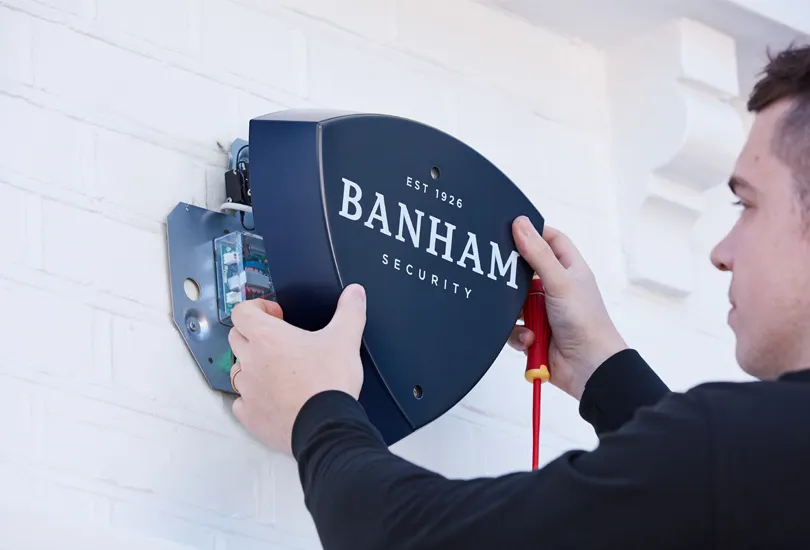
The shield design of our alarm box and door lock is a period feature in its own right, seen on the front of some of Britain’s most notable properties over the decades. It’s become a symbol of period London, and was immortalised in John Le Carre’s bestselling novel Tinker, Tailor, Soldier, Spy and the iconic film Notting Hill.
“I think that experience is particularly valuable, as you have to find the right balance between providing the level of security required and respecting the character of the property. Success is when the client has the level of protection they need, the system is fully compliant and the building still looks like the building they fell in love with.”
Adam joined Banham in 2007, giving him a broad understanding of the business and how projects come together. With 19 years of first hand experience tailoring security solutions to meet customer needs, he’s the perfect person to answer your questions on the security solutions for unique period, listed, or protected properties.
Why do listed buildings need a different approach?
The biggest question we’re asked is: "How can we secure a property without changing the way it looks?"
Customers understandably want modern security, but they don't want to see modern security everywhere. They come to us looking for equipment that can be concealed, solutions that allow existing doors and architectural features to be retained, minimal cabling, and security measures that don’t interfere with original features. A common concern is whether a security system can be upgraded without having to undertake significant work to the building.
With listed properties, the challenge isn't always something obvious. A seemingly straightforward security requirement can become quite complicated when you cannot drill or alter something. These types of projects demonstrate why a one-size-fits-all approach isn’t suitable. You have to think creatively about where technology can be positioned, how cabling can be routed and how physical security can be introduced without making the security system visually dominant.
What does ‘invisible’ security really look like?
There is a temptation to think that "concealed" simply means hiding a device. In reality, it is about designing the whole installation properly from the beginning, so that the technology becomes part of the building rather than an obvious addition to it.
Intruder detection can be discreetly concealed within architectural features or positioned somewhere naturally unobtrusive. We offer colour matching to existing surrounds and can source specialist compliant equipment that also satisfies on the design front.
With CCTV, one solution is perimeter placement, with cameras looking from the outside in towards the property, rather than being installed on the building itself. Design-sympathetic locking and access-control solutions can be used to preserve original doors, with our entry systems seamlessly integrated into wider CCTV systems to still allow coverage at vulnerable locations.
Fire protection can be particularly challenging because the equipment has to meet stringent requirements, but options such as aspirating detection are considerably more sympathetic than standard detection set-ups.
How do you collaborate with architects and specifiers?
At the start of a project, I will have an open conversation with the architect or specifier, asking what they are trying to achieve aesthetically, where their concerns are and what they don't want to see. From there, we can work alongside them to find a technical solution that meets the security requirement without fighting against the architectural design.
This early-stage collaboration in very important as it allows us to identify opportunities where security can be integrated into the design, rather than trying to retrofit it afterwards.
We aren't there to tell an architect how their building should look; we're there to understand their vision and work out how we can protect it.
What does this look like in practice?
Before discussing solutions, the first step is to understand the requirements of both the property and the customer. We’ll have an initial conversation and site visit to understand the building, how it is used, what the customer’s concerns are and what level of protection they are looking for.
From there, our surveyor looks at the property in detail. With a listed building, we are looking not only at where security equipment needs to go, but also at the architectural features, finishes, existing infrastructure and any limitations that may affect how something can be installed.
We then work through the proposed security solution with the customer and their architect, designer or contractor. Sometimes that means adapting the original proposal several times to find the right balance between security, aesthetics and practicality.
Once an approach has been agreed, the project is managed through to installation, commissioning and handover. And the process doesn't finish when the equipment is installed, we want to make sure the system works as intended, the customer understands it and the finished installation sits comfortably within the property.
What’s the Banham difference?
In terms of my own role, the biggest difference is taking ownership to create a consistent point of contact, to be the conduit between the customer and the wider Banham team.
Because we have the benefit of offering surveying, technical, installation, maintenance and security expertise within the same organisation, we can bring different disciplines together when a project requires it.
The Banham difference is that the customer feels looked after from the first conversation through to completion and beyond.
What’s the first step of the process?
The first part of our service is a free, no obligation visit at your home. To speak with one of our security consultants about a new enquiry or to schedule a security review of your property please call 020 7819 3730 or complete the form below and we'll be in touch.
Book a Survey
Arrange a free survey with our expert team to assess your home or business security needs.